

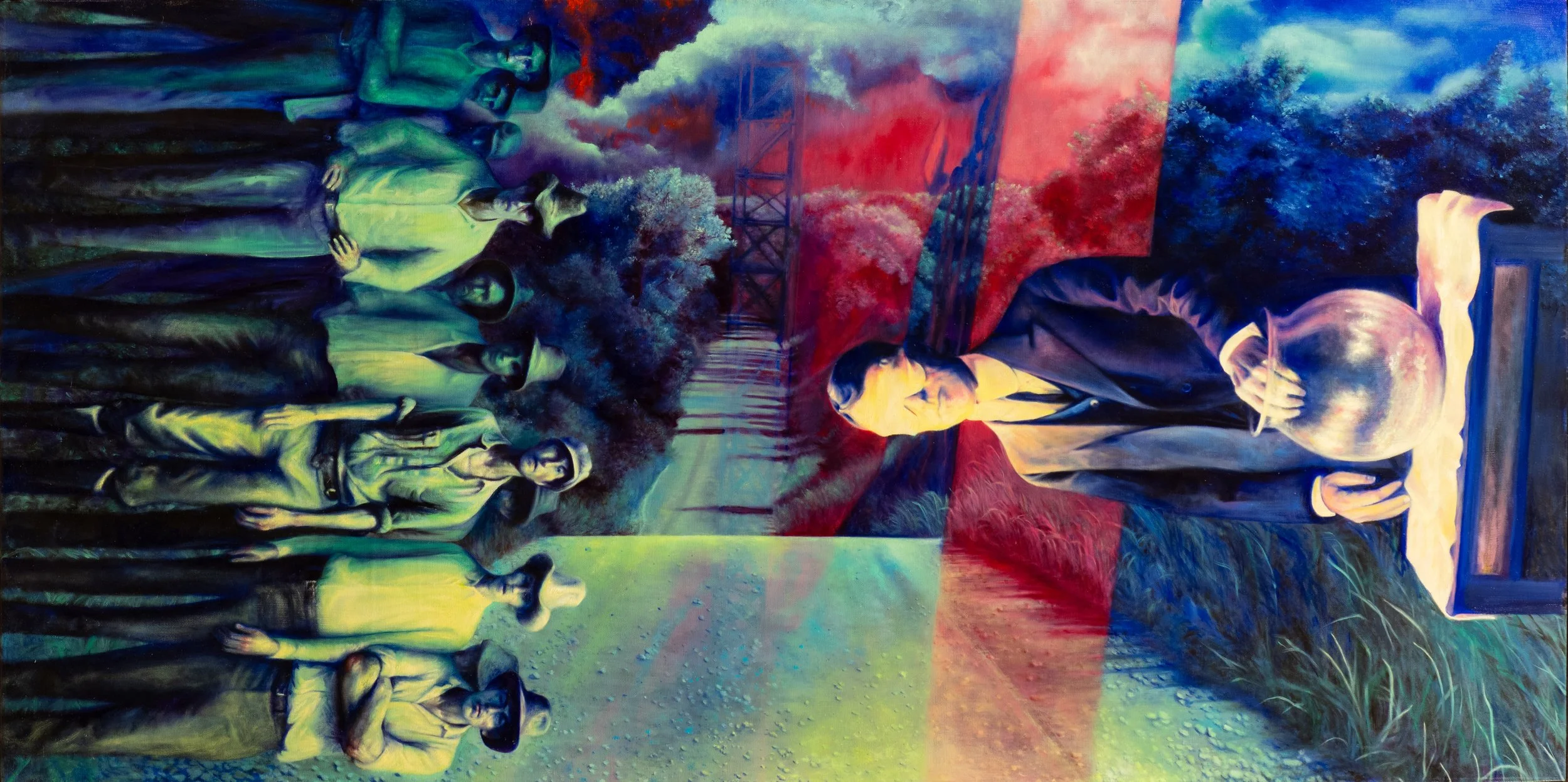
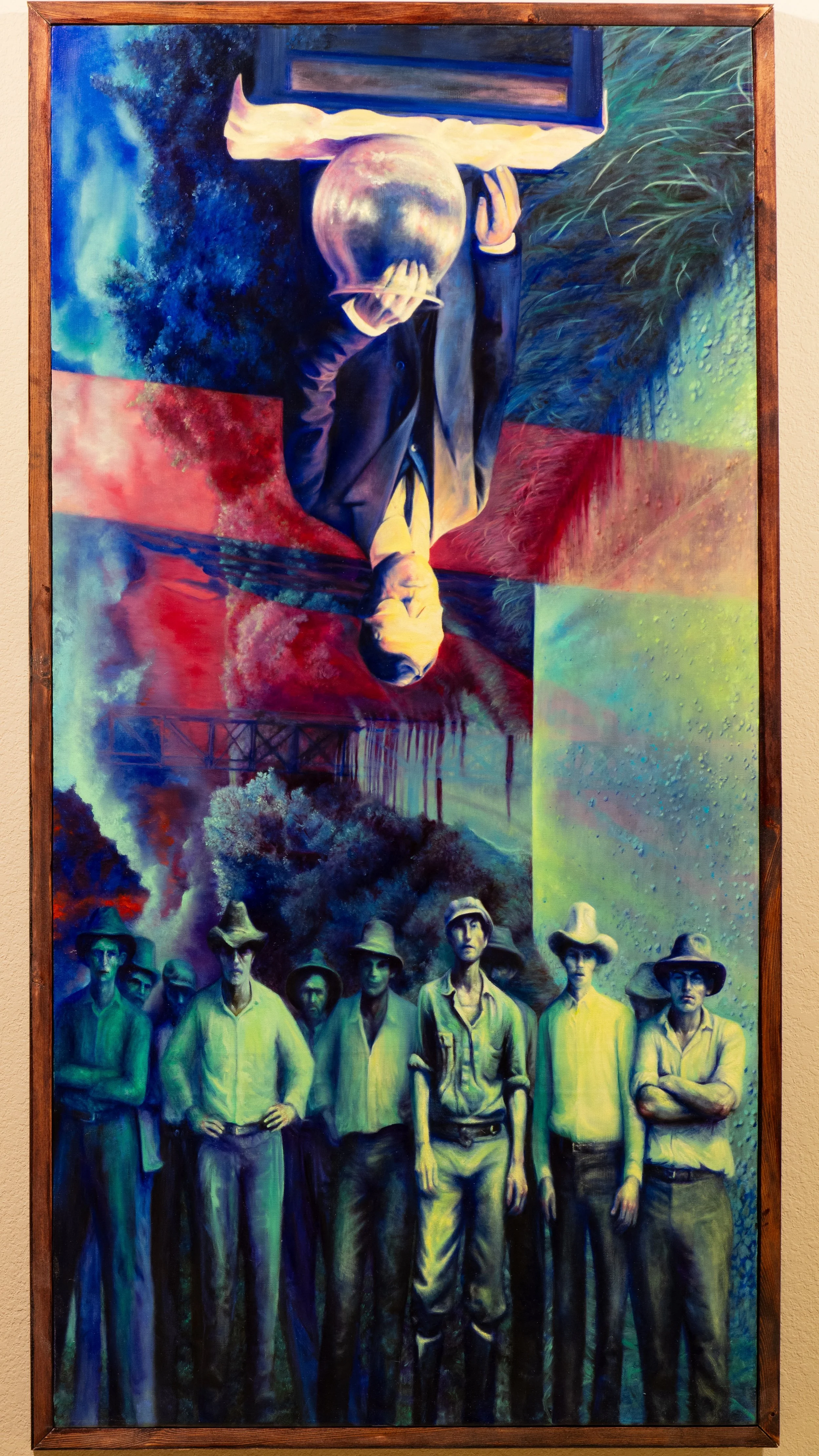
Green Corn, Cherry-Apple Peach, Oil on Canvas, 24”x48”, 2026
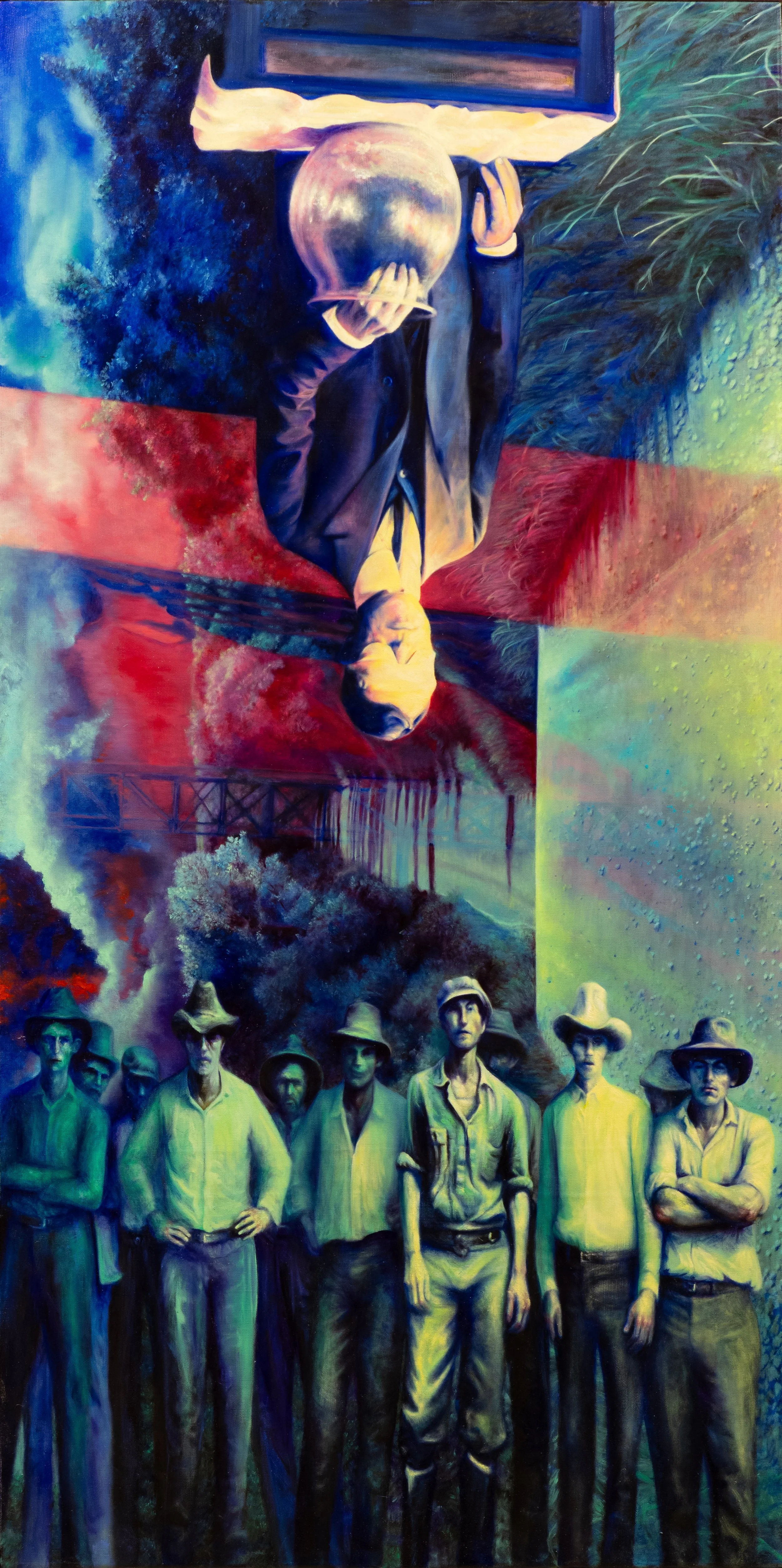
The Green Corn Rebellion was the only socialist rebellion to ever take place in the US. It happened in rural Oklahoma in 1917, partially in response to the WW1 draft. "Rich man's war, poor man's fight." The idea was that Woodrow Wilson, who was elected president on the promise he would keep America out of the war, was sending the working class to die in Europe specifically because American banks had loaned so much money to the French and English war effort. Meanwhile, back in Oklahoma, many families had already been reduced to tenant farming via pumped up interest rates, falling crop prices, and land speculation. The draft would send off the members of those families most capable of difficult manual labor to kill and die protecting the investments of the very bankers starving them out. The rebellion takes its name from the militia's plan to subsist on the unripe corn they encountered as they marched east, to the capital. Bad logistics like this had a lot to do with why the thing failed so quickly.
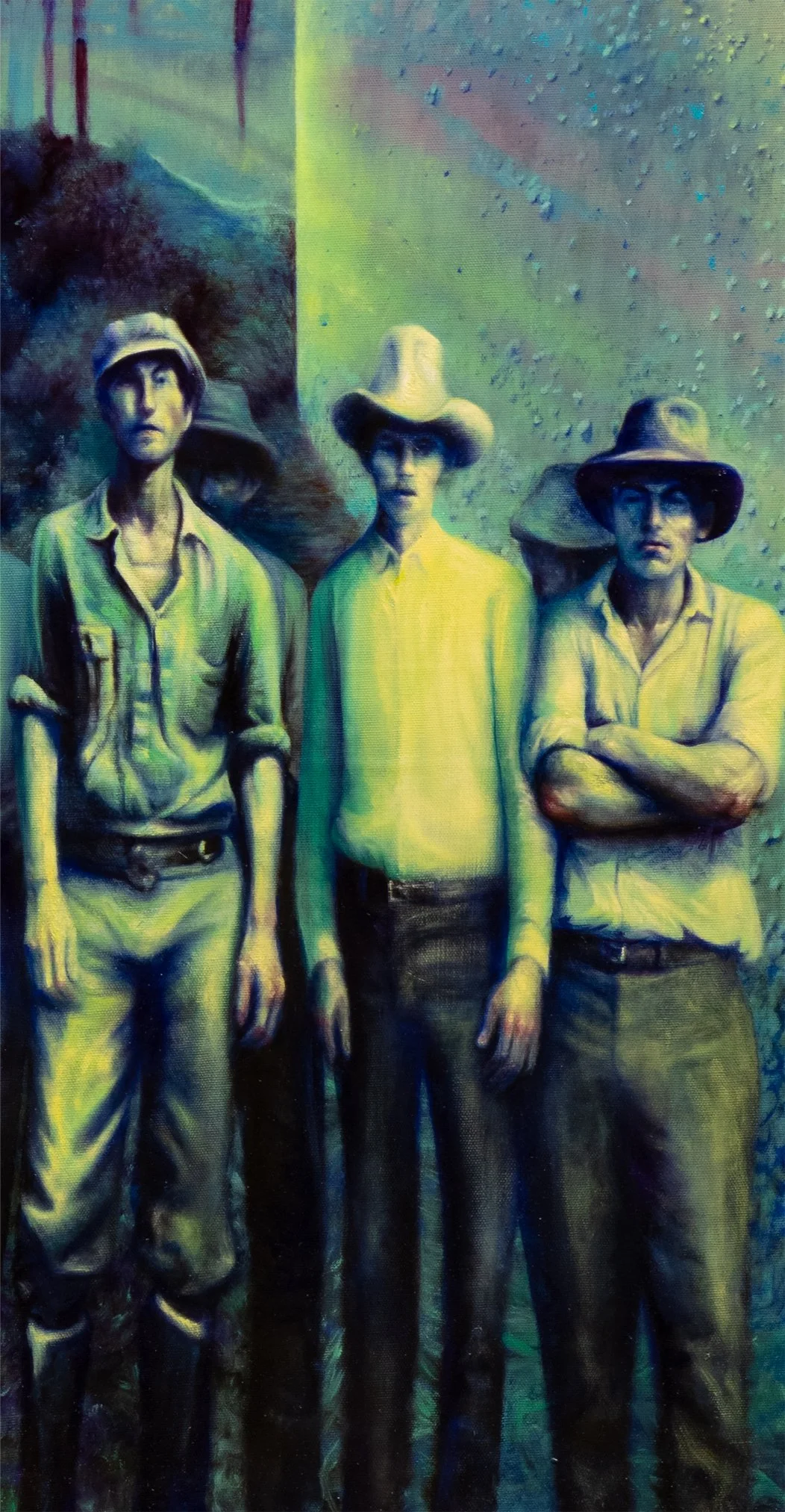
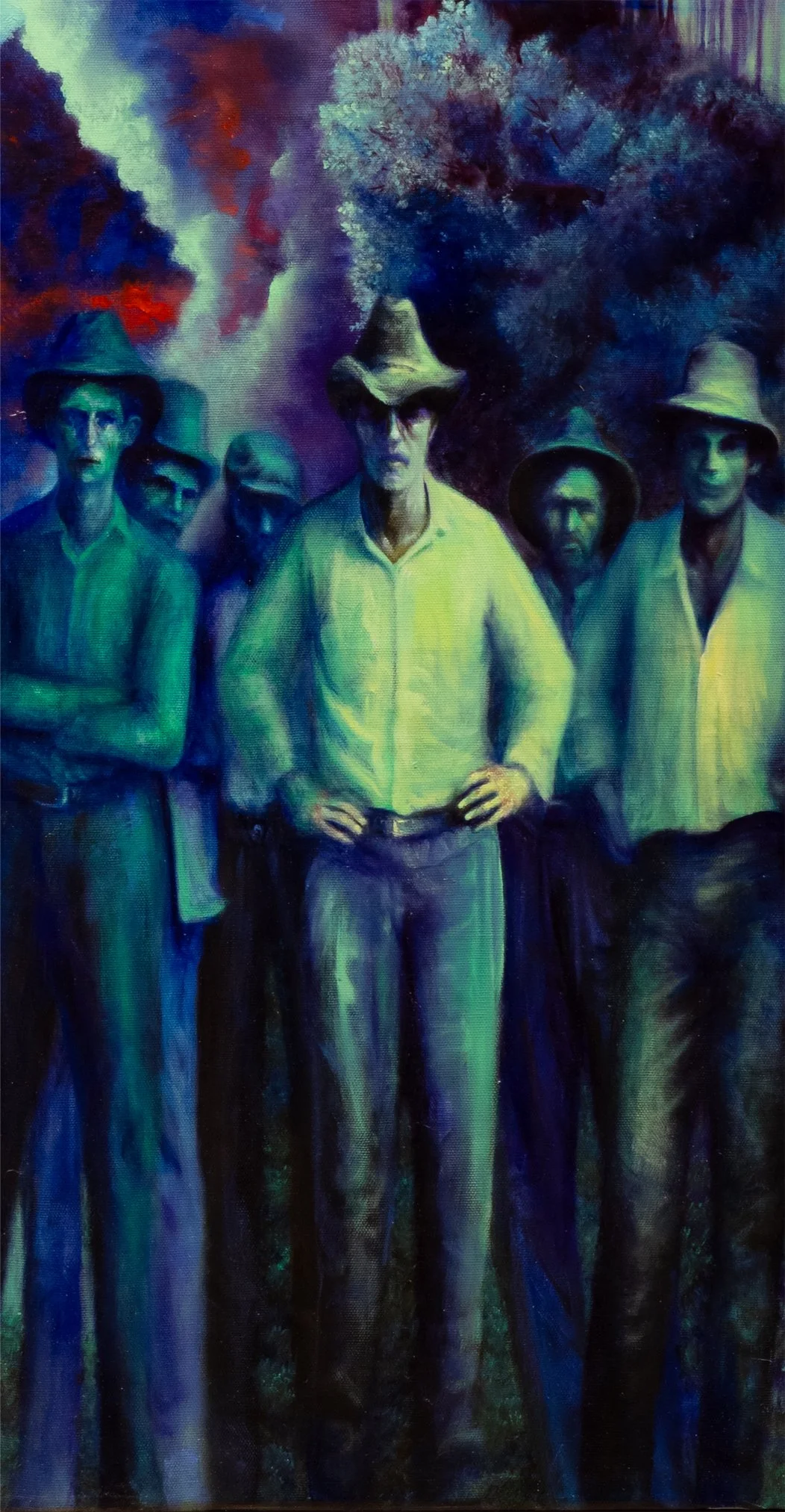
I painted this piece almost exclusively from pictures I found in old newspaper articles surrounding the event. Though there were hundreds of people arrested for taking part in the rebellion, only a handful of them were photographed together. The guys at the bottom of the canvas are painted directly from that picture. In the original, you can actually see a few cops covering the men with shotguns in the margins.
Moving up, if you look past all of the turquoise and into the red you can see the Canadian River and the train bridge that passes over it. This was dynamited to prevent the feds from sending troops west to stop the massing rebellion. While not especially effective, I liked the symbolism of the exploded link between the involved entities. The severed connection between the power structure and the people.
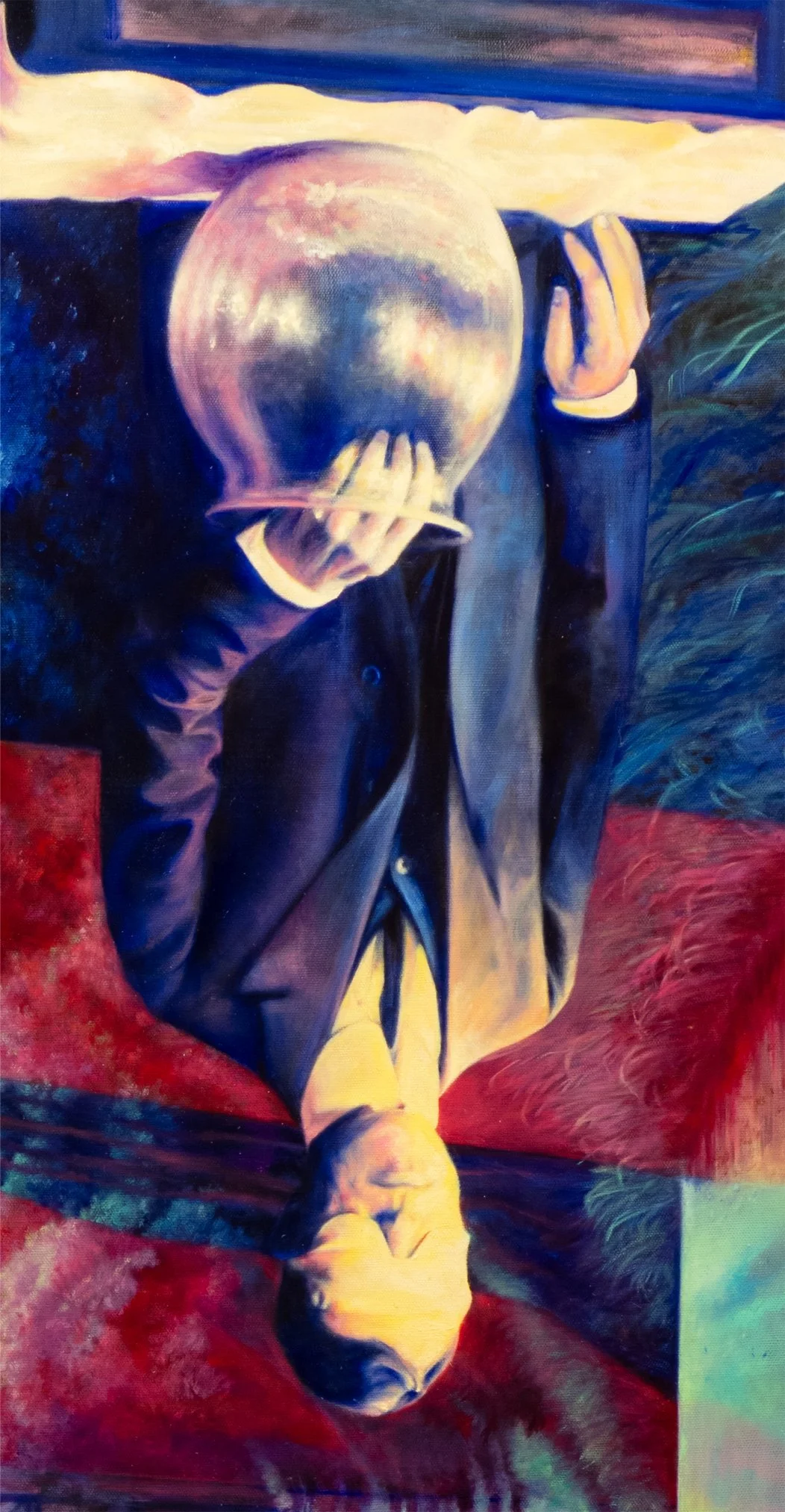
The figure in the more expensive clothes at the very top is Newton Baker, the secretary of war for the Wilson administration. I pulled that reference photo from a PR event he put on to personally draw the first lots of the draft. He doesn't mind wearing a blindfold because he already knows that nobody dressed as well as him will have to go if they don't feel up to it. He's upside down to illustrate that the interests of the exploiters and the exploited are inherently at odds. For one's world to be right-side up, the other's has to be upside down.
The failure of this rebellion is incidental to my interest in the subject matter as a painter. What I'm really interested in is the tipping point in the relationship between the dominators and the dominated. What's in the moment that people decide the terms of the social contract must be renegotiated by any means necessary? When is the unpredictability of violence preferable to the devil you already know? I'll discuss my intentions for this series more as I finish the work. Suffice it to say, the events I intend to paint are not common knowledge in America, but they definitely should be.
Lastly, if you rotate the canvas 90 degrees clockwise, you can see the road at Roasted Ear Ridge. This is where a lot of the guys gathered before heading off to the final meetup at Spear's mountain. It's a literal road to revolution that divides the two sections of the painting.
- C-AP 11/25/2026